

Reduced vision is not automatically caused by a cataract, and choosing a premium lens is not simply a matter of selecting the most advanced label. By following the assessment, lens-planning, surgery and review stages, you can understand which questions to ask and whether the proposed visual result fits your eyes, work and daily habits.
Key takeaways
- Confirm that cataract—not glasses power or another eye disease—causes your reduced vision.
- Match the premium lens to your driving, reading, screen use and eye-health needs.
- Ask which visual result is realistic and whether glasses may still be needed.
- Attend postoperative reviews to check healing, eye pressure, vision and complications.
What happens at the first cataract assessment?
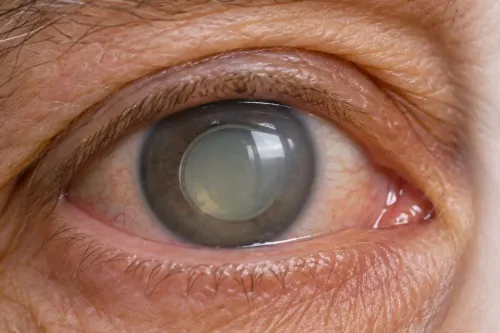
Reduced vision is not automatically caused by a cataract. The cataract treatment process in Panchkula starts by separating cataract-related blur from an uncorrected prescription or another eye problem.
1. You read a visual-acuity chart, then undergo refraction to identify glasses power that could improve vision. The clinician measures eye pressure and uses a slit lamp to examine the cornea, lens, ocular surface and visible optic nerve. A dilated retinal examination checks the retina and macula for diabetic retinopathy, macular disease or other damage.
Glaucoma, corneal disease and dry eye can also cause blur.
2. Corneal measurements and optical biometry record eye length and corneal power to estimate the intraocular-lens (IOL) power. Biometry is an estimate, not a guarantee of an exact postoperative prescription. Contact-lens wear, dry eye, corneal scars, previous laser vision correction, very dense cataracts, and unusually short or long eyes can make readings unreliable.
3. The clinician may request macular OCT when retinal disease is suspected. Corneal topography gives a closer map when astigmatism is irregular or corneal shape needs analysis. Stop contact lenses for the instructed period, treat surface dryness, or repeat measurements before choosing an IOL; specialised formulas can help with unusual eyes or previous laser surgery.
How do lifestyle and eye health determine the premium lens?
Your planned focus—distance, intermediate, near or monovision—links the IOL to how you drive at night, use a computer, read, work outdoors and spend time on hobbies. A premium cataract service in Panchkula should match those priorities rather than treat every premium lens as interchangeable.
| Option | Main visual aim | Best fit and trade-offs |
|---|---|---|
| Standard monofocal | One focal distance, usually distance | Strong contrast and predictable night driving; glasses are usually needed for computer work or reading |
| Toric | Corrects regular, stable corneal astigmatism | Useful when astigmatism causes blur; it does not suit irregular or changing corneal shape |
| Extended-depth-of-focus | Distance plus a useful intermediate range | Helpful for outdoor work and computer use; reading glasses, halos or reduced contrast remain possible |
| Multifocal or trifocal | Distance, computer and reading vision | More independence from glasses; halos, glare, reduced contrast and residual spectacle dependence can occur |
Toric planning requires repeated keratometry or corneal topography, axis marking and accurate alignment inside the eye. If the lens rotates, astigmatism correction can fall, leaving persistent blur and sometimes requiring an enhancement.
Significant corneal disease, severe dry eye, macular disease, advanced glaucoma, uncontrolled diabetes, irregular astigmatism or unrealistic expectations can favour a simpler monofocal strategy. The examination—not the word “premium”—decides suitability. Even a well-chosen design cannot guarantee freedom from glasses.
What happens on the day of customised cataract surgery?
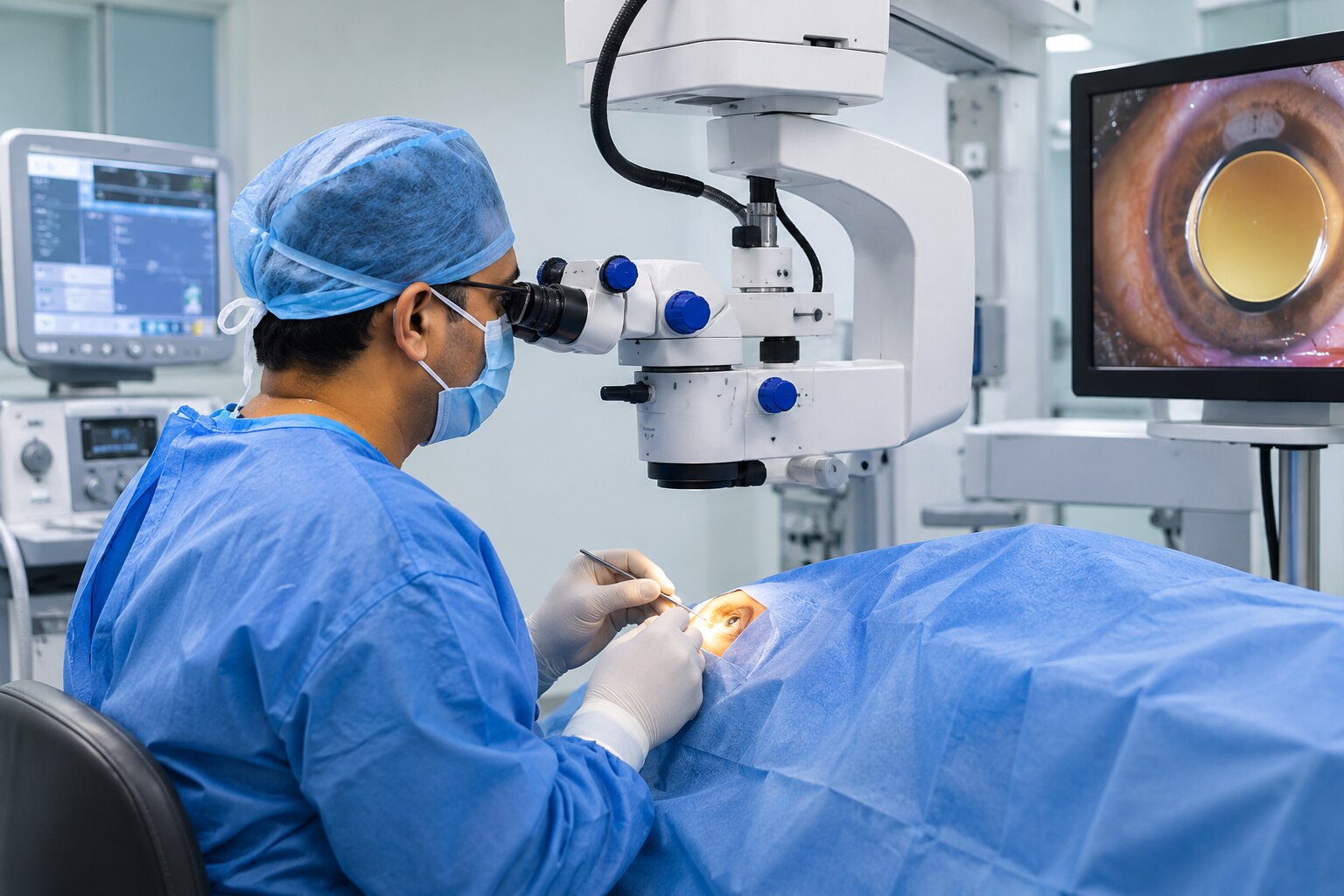
The team first reviews your medicines and health conditions because diabetes, blood thinners, allergies and other illnesses can change preparation or anaesthesia instructions. They confirm the eye being treated, recheck the planned IOL, and explain eating, regular medicines, transport home and postoperative drops.
Cataract surgery is usually an outpatient procedure, but you should not drive yourself after discharge.
The usual sequence is:
- Drops or local anaesthesia numb the eye.
- The surgeon makes a small entry in the cornea.
- The cloudy lens is opened and broken into pieces with ultrasound.
- The fragments are removed.
- The selected IOL is placed inside the capsular bag.
“Premium” refers primarily to the IOL design and the measurements and planning, not automatically to laser surgery.
| Approach | What happens | Practical points |
|---|---|---|
| Manual phacoemulsification | Ultrasound breaks up and removes the lens | Cost, availability and surgeon experience matter |
| Femtosecond-assisted surgery | A laser performs selected preliminary steps | Optional platform; it is not proven to give every patient better final vision |
Discuss both approaches rather than assuming one is superior. A premium cataract service in Panchkula should explain the proposed technique, IOL and costs before consent. Netra Eye Hospital is a Panchkula provider where you can discuss the assessment, measurements and surgery; the exact technique requires consultation.
Customised cataract surgery in Panchkula still ends with eye protection, drop instructions and a planned review.
Related services
Customised Premium Cataract Service at Netra Eye Hospital offers advanced cataract treatment tailored to each patient's visual needs and lifestyle. View service → |
Clinical Service at Netra Eye Hospital provides comprehensive diagnosis, treatment, and advanced surgical care for patients with cataracts. View service → |
What is checked during recovery and postoperative review?
After discharge, vision can fluctuate while the cornea and ocular surface recover. During follow-up appointments, the clinician checks eye pressure, inflammation, wound integrity, corneal clarity, IOL position and any residual refractive error.
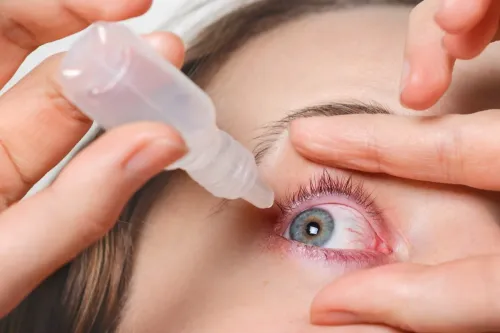
Use prescribed antibiotic and anti-inflammatory drops exactly as instructed. Do not stop them simply because vision improves; premature interruption can allow inflammation or infection to worsen.
Seek urgent eye assessment for:
- Severe or increasing pain
- Rapidly worsening vision
- Marked redness
- New flashes of light
- A shower of floaters
- A curtain-like shadow across the field of vision
These warning signs can signal infection, a retinal tear or detachment, or serious pressure or inflammation problems. Do not wait for the next routine review.
Blur that returns months or years later has other possible causes. Posterior capsule opacification, in which the membrane behind the IOL becomes cloudy, is usually treated with a YAG laser capsulotomy. Glaucoma, retinal disease, corneal disease and dry eye can also limit vision after a technically successful operation.
A premium IOL does not prevent these conditions or guarantee permanent freedom from glasses. During the cataract treatment process in Panchkula, ask how your findings affect the follow-up plan. The same applies to customised cataract surgery in Panchkula: the lens choice improves the planned focus, but it cannot remove every cause of future blur.
How should you decide whether the proposed result is realistic?
A realistic result is one that matches the eye’s health, the planned focus and the tasks you actually perform—not a promise of glasses-free vision.
Ask for condition-specific counselling if you have diabetes, previous retinal disease, glaucoma, uveitis, corneal disease or previous laser vision correction. These conditions can alter measurements, healing and visual potential, so the surgeon must separate cataract-related blur from problems surgery cannot reverse.
Ask the surgeon:
- What is causing my current blur?
- Is the target focus distance, intermediate, near or monovision?
- Which tasks will still need glasses?
- How does night driving affect the lens choice?
- Is my corneal astigmatism regular and stable?
- What happens if the residual prescription is unsuitable or the IOL position is unsatisfactory?
| Lens choice | Expected benefit | Trade-offs |
|---|---|---|
| Monofocal | One main focal distance | Glasses for other distances |
| Toric | Correction of regular astigmatism | Requires stable measurements and accurate alignment |
| EDOF or multifocal/trifocal | More intermediate or near vision | Halos, glare, reduced contrast or residual glasses |
To compare a premium cataract service in panchkula, request the examination findings, proposed IOL type, expected visual range, known optical side effects, follow-up schedule and enhancement policy. customised premium cataract treatment in panchkula is a planning process, not spectacle-independence insurance. Choose the lens whose trade-offs suit your eye and priorities, not the longest feature list.
Frequently asked questions
What happens at the first cataract assessment?
The assessment separates cataract-related blur from an uncorrected prescription or another eye problem. It includes vision testing, a slit-lamp examination, eye-pressure measurement and tests that assess the retina and optic nerve before surgery is planned.
How do lifestyle and eye health determine the premium lens?
Your reading, driving, screen-use and spectacle preferences help guide lens selection. The surgeon also considers corneal shape, retinal and optic-nerve health, dry eye, astigmatism and other conditions that affect the result.
What happens on the day of customised cataract surgery?
The team confirms your identity, eye, lens plan and measurements before surgery. After anaesthesia and preparation, the cloudy lens is removed and the selected intraocular lens is inserted, followed by discharge instructions and prescribed medicines.
What is checked during recovery and postoperative review?
Reviews check wound healing, vision, eye pressure, inflammation and signs of infection or other complications. The schedule also confirms when you can resume activities and whether a spectacle prescription is needed.
How should you decide whether the proposed result is realistic?
Ask whether you will need glasses for reading, driving or screens, how existing eye disease affects the forecast, and which risks apply to the chosen lens. Request a clear explanation of the expected range of vision rather than a promise of spectacle-free sight.