

An eye that turns inward, outward, upward, or downward can appear only when a child is tired, ill, looking far away, or focusing close up. By recognising the warning signs, understanding the assessment, and comparing treatment and follow-up needs, you can decide when your child needs specialist review and what useful progress looks like.
Key takeaways
- Arrange an assessment for constant or intermittent eye turning.
- Ask whether the examination checks vision in each eye separately.
- Follow glasses, patching, exercises, or surgery plans exactly as prescribed.
- Choose a service with paediatric assessment and long-term follow-up.
How can you tell whether a child has a squint?
Look for one eye turning in, out, up, or down, either constantly or intermittently. A child may tilt the head, close one eye in bright light, or report double vision. The deviation may appear during tiredness, illness, distance viewing, or near work; intermittent squint still needs assessment because a brief clinic observation can miss it.
Age-specific clues include:
- Baby: a persistent eye turn or an abnormal white pupil reflex in an eye or photograph.
- Toddler: frequent eye closure, head tilting, or another unusual head posture.
- School-age child: reading difficulty, headaches with near work, or clear preference for using one eye.
- Teenager: new double vision, eye strain, or difficulty keeping the eyes aligned.
A broad nasal bridge or prominent epicanthic folds can create pseudostrabismus, making a baby look cross-eyed when the eyes are aligned. Photographs cannot reliably distinguish pseudostrabismus from true misalignment, and both can occur together. Do not assume a child will outgrow a squint: the brain may suppress the misaligned eye, causing amblyopia and reduced vision.
Arrange prompt or emergency assessment for sudden onset, pain, vision loss, double vision, headache, vomiting, imbalance, weakness, unequal pupils, trauma, or a new white reflex. These signs can indicate eye or neurological disease, not simply a cosmetic problem. Early child squint care in Panchkula helps protect developing vision.
What happens during a paediatric squint assessment?
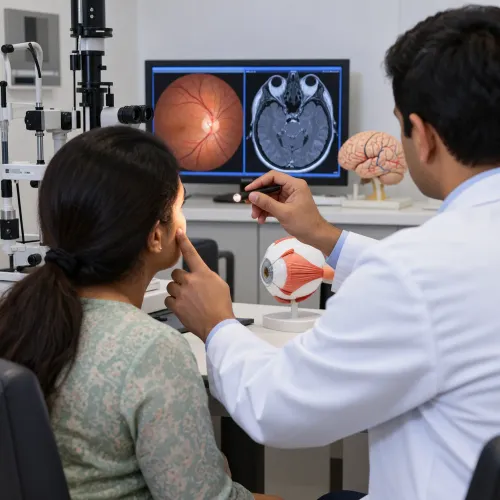
A pediatric squint assessment starts with a parent history: when the turn began, which eye moves, triggers, head posture, double-vision complaints, family history, and previous glasses or treatment.
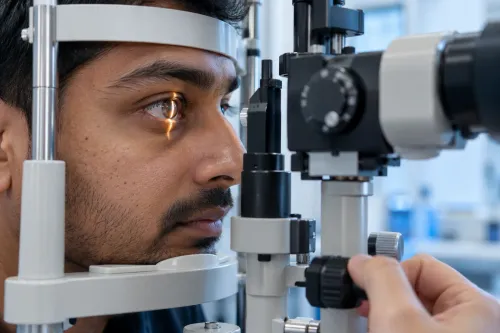
The clinician tests vision separately in each eye, checks fixation, eye preference, alignment at distance and near, eye movements, and cover responses with and without glasses when relevant. They assess focusing, pupils, and red reflex, then examine the front and back of the eyes when appropriate.
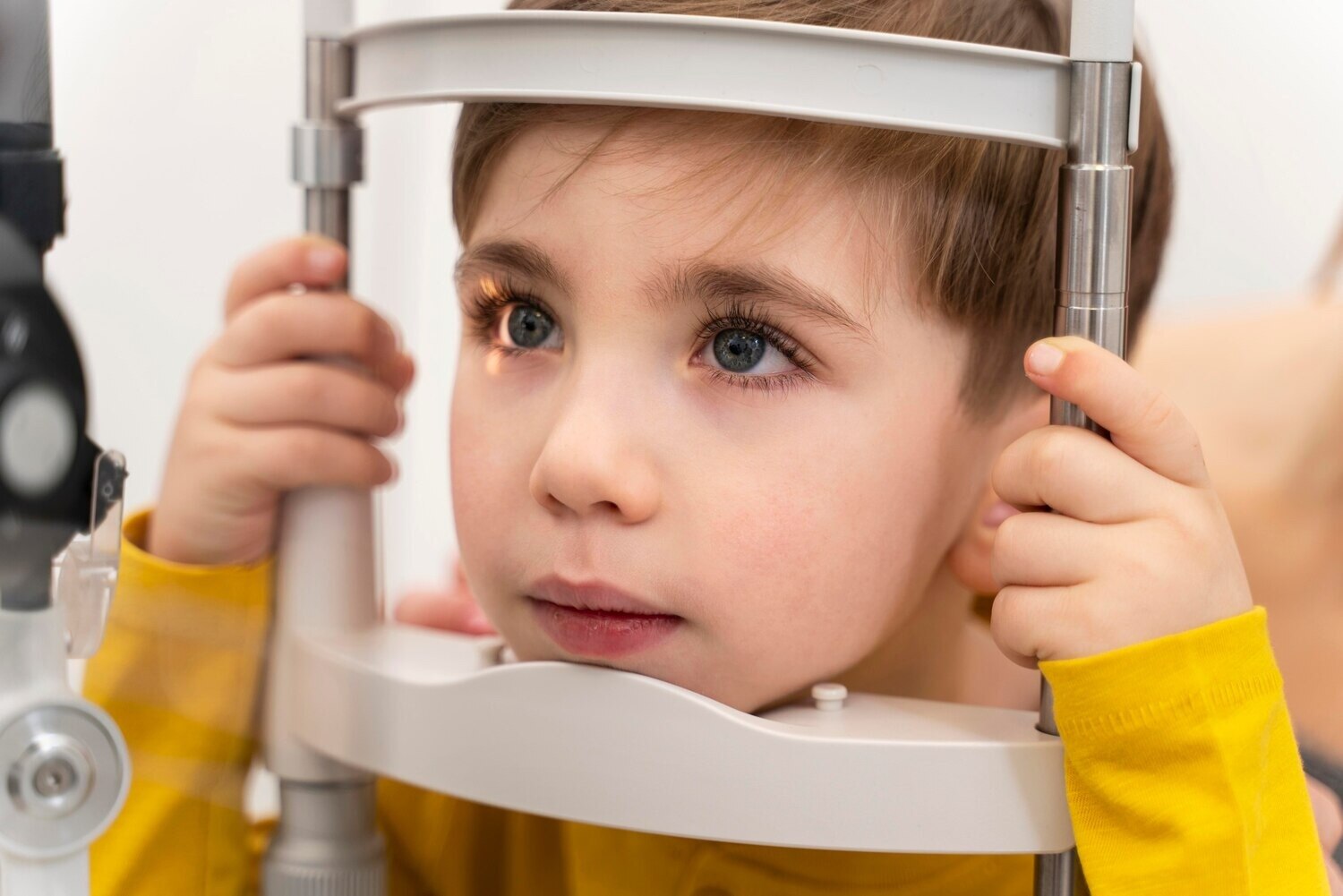
Preverbal children do not need a letter chart. A pediatric squint specialist in Panchkula may use pictures, lights, matching symbols, fixation observation, and age-appropriate vision methods. Cycloplegic refraction after dilating drops is used when needed to find farsightedness or unequal prescriptions. An anxious child may need repeated measurements across visits.
- Bring glasses, prescriptions, reports, medication details, and photographs or videos.
- Note which eye turns, its direction, frequency, triggers, head posture, double-vision complaints, and family history.
| Test | What it may show | What it can miss |
|---|---|---|
| Complete assessment | Each eye’s vision, alignment, focusing, and ocular health | — |
| School screening | Whether a child reads a chart | Intermittent squint, abnormal head posture, unequal vision, amblyopia risk, and eye disease |
| Spectacle-shop test | A rough spectacle prescription or chart reading | The full alignment and eye-health assessment |
Sudden eye turning, pain, vision loss, double vision, headache, vomiting, imbalance, weakness, unequal pupils, trauma, or a new white reflex requires prompt care; do not wait for routine screening.
How does treatment improve vision and alignment?
Treatment improves vision by addressing both the cause and its visual consequence. Glasses correct refractive error and can substantially straighten accommodative inward turns. If amblyopia has weakened one eye, patching the stronger eye or using atropine penalisation encourages the brain to use the weaker eye; it does not reposition the muscles.
| Option | Purpose | Effort, reversibility, duration and follow-up |
|---|---|---|
| Observation | Monitor a controlled deviation | Lowest effort and fully reversible; suits selected children, but requires reviews because alignment can change |
| Glasses | Correct refractive error and support alignment | Requires consistent wear; reversible, often long-term; prescription and alignment need checks |
| Patching | Improve vision in the weaker eye | Requires the prescribed duration; reversible; excessive patching can cause problems, so follow-up matters |
| Surgery | Change extraocular muscle alignment | Involves an operation and recovery; alignment change is not automatically permanent; follow-up may identify residual deviation |
Exercises apply only to selected conditions. Prisms, botulinum toxin, or eye-muscle surgery suit particular deviation patterns. Surgery does not automatically restore suppressed vision, remove glasses, or end amblyopia treatment.
The goals of squint treatment in Panchkula are stronger vision in both eyes, comfortable binocular use, achievable depth perception, and fewer compensatory head positions. Social or school confidence may improve, but no treatment guarantees an appearance or confidence outcome.
Choice depends on age, deviation type, eye movements, refraction, and vision in each eye; a squint service for children should assess all of these.
What effort and follow-up should families expect?
Expect repeated reviews, not a single pass or instant visual change. Families asking about pediatric squint care benefits in Panchkula should expect progress to mean clearer vision in the weaker eye, steadier alignment, better fixation, less eye preference, or a more natural head position.
Clinicians assess children who cannot describe double vision by watching alignment, fixation, eye preference, head posture, and age-appropriate acuity.
| What is reviewed | Why it matters | What families should do |
|---|---|---|
| Alignment and fixation | Shows whether control is improving | Attend scheduled measurements |
| Vision in each eye | Detects amblyopia or unequal progress | Bring current glasses |
| Glasses and patching | Confirms prescribed treatment is being used | Report discomfort or refusal |
| Agreed goals | Defines meaningful improvement | Keep review records |
Alignment can change as a child grows, so apparent improvement does not always end monitoring. Keep glasses on with a consistent routine; check frame fit, comfort, stability, and clean lenses. Coordinate patching or other treatment with school, attend reviews, and maintain records when care is shared between Panchkula, Chandigarh, or nearby towns.
Explain visits as looking at pictures or lights, not as a threat of injections or surgery. Contact the clinician if glasses or patching cannot be tolerated.
- Which eye is affected?
- Does vision differ between the eyes?
- Are glasses needed full-time?
- Is patching indicated?
- What improvement will you measure?
- When is the next review due?
How should you choose a child squint service in Panchkula?
Choose a service by what it measures, not by words such as “advanced,” equipment claims, or promises of permanent correction. A pediatric squint specialist in Panchkula should offer the following:
- Experience testing infants and children who cannot read letters.
- Separate vision testing, objective cover and alignment measurements at distance and near, with and without glasses when relevant.
- Eye-movement assessment and cycloplegic refraction after dilating drops.
- Amblyopia management, ocular health examination, and access to surgery when indicated.
- Documented follow-up and clear explanations of observation, glasses, patching, prisms, exercises, and surgery.
- Written urgent-contact instructions.
| Capability to verify | Why it matters |
|---|---|
| Separate vision and cover testing | Detects unequal vision, intermittent deviation, and near-distance differences |
| Cycloplegic refraction and eye-health examination | Finds focusing errors or eye disease hidden by a casual appearance check |
| Treatment and follow-up plan | Shows who will monitor glasses, patching, alignment, and surgical decisions |
For squint treatment in Panchkula, compare travel time for repeated reviews, appointment hours around school, access to spectacles, and continuity of records if care moves between Panchkula and Chandigarh. Ask Netra Eye Hospital whether its paediatric and squint team can provide the measurements, treatment options, surgery access, and follow-up your child needs.
A routine squint service for children is not the first stop after chemical exposure, serious injury, severe pain, sudden vision loss, or sudden eye turning with neurological symptoms; seek emergency eye care.
Book an assessment for persistent, recurrent, or symptom-associated deviation. Seek urgent care for sudden or neurological signs.
Related services
Scope Of Service at Netra Eye Hospital provides specialized eye care for infants, children, and adolescents, with a focus on the diagnosis and treatment of squint... View service → |
Clinical Services at Netra Eye Hospital provides specialized eye care services for infants, children, and adolescents. View service → |
Frequently asked questions
How can you tell whether a child has a squint?
Look for one eye turning in, out, up, or down. Head tilting, closing one eye in bright light, double vision, and squint that appears when tired also warrant an assessment.
What happens during a paediatric squint assessment?
The clinician checks each eye’s vision, eye movements, alignment at different distances, focusing, and the inside of the eyes. Drops may be used to measure the child’s prescription accurately.
How does treatment improve vision and alignment?
Glasses correct focusing problems, while patching or prescribed exercises encourage the weaker eye to work. Some children need eye-muscle surgery to improve alignment after assessment.
What effort and follow-up should families expect?
Families need to follow wearing, patching, or exercise instructions and attend repeat checks. Follow-up tracks vision, alignment, treatment response, and changes as the child grows.
How should you choose a child squint service in Panchkula?
Choose a service that assesses children across age groups, explains the diagnosis and options clearly, checks vision in each eye, and provides planned follow-up for glasses, patching, or surgery.