


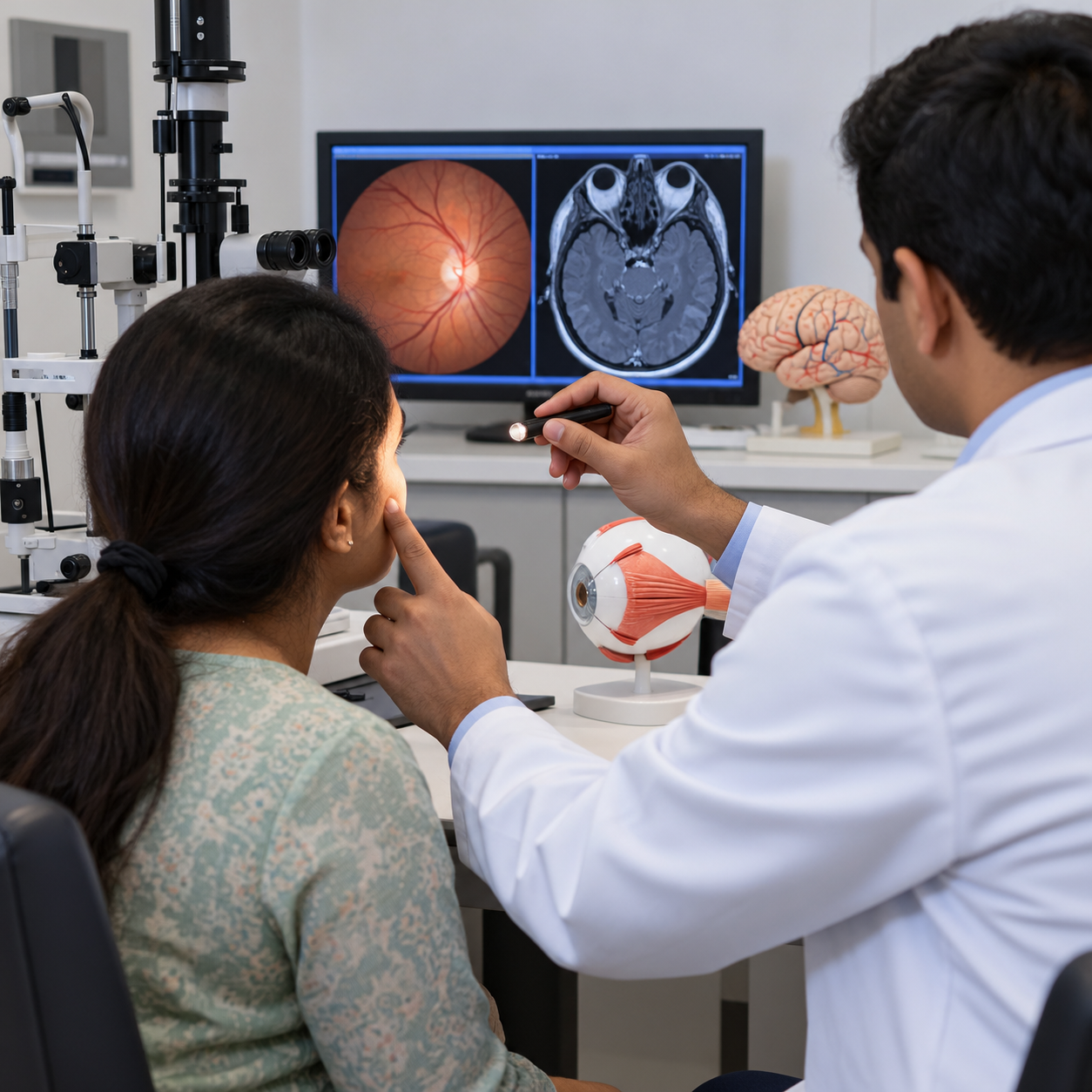
Vision depends on more than the physical structures of the eye. The optic nerves, brain pathways, plus systems controlling eye movement all contribute to the way visual information is processed. This connection explains why certain visual symptoms require assessment that considers both ophthalmic plus neurological factors.
A Neuro-Ophthalmology Specialist in Chandigarh may evaluate patients whose symptoms involve the optic nerve, visual pathways, pupil responses, eye movement, or unexplained visual loss.
Symptoms that may lead to neuro-ophthalmic assessment include
- Unexplained loss of vision
- Double vision
- Abnormal eye movement
- Changes in visual field
- Optic nerve swelling
- Sudden colour-vision changes
- Unequal pupil responses
- Visual symptoms associated with neurological disease
- Selected headache-related visual disturbances
Double vision is one example where detailed evaluation can be important. The symptom may arise from eye alignment problems, nerve dysfunction, muscle disorders, thyroid-related disease, trauma, plus other causes. Determining whether double vision occurs with one eye open or requires both eyes can provide useful diagnostic information.
Optic nerve disorders can also produce symptoms that differ from common refractive problems. A patient may experience reduced colour intensity, central blur, visual-field changes, or unexplained loss of clarity despite apparently normal front structures of the eye.
Assessment begins with a detailed history. Timing can be particularly informative. Sudden symptoms may suggest a different group of causes from changes that develop gradually over months.
The ophthalmologist may ask about headaches, weakness, numbness, previous neurological conditions, medications, recent illness, trauma, plus systemic health history. This information helps place the visual complaint in a wider clinical context.
Examination can include visual acuity, colour vision, pupil responses, eye movement, optic nerve appearance, plus visual-field testing. Imaging or additional investigations may be recommended according to findings.
Patients should bring relevant previous reports when available because comparison with earlier imaging, visual fields, laboratory results, or ophthalmic records may help establish how the condition has changed over time.
Provider selection is especially important when symptoms cross the boundary between eye disease plus neurological function. A suitable evaluation should focus on identifying the anatomical source of the visual problem rather than assuming that every change in eyesight comes from spectacle power.
Certain symptoms warrant prompt assessment. Sudden double vision, abrupt visual loss, new visual-field defects, severe headache accompanied by visual change, plus newly identified optic nerve swelling should not be treated as routine spectacle complaints.
Netra Eye Hospital provides neuro-ophthalmic assessment for patients in Chandigarh when symptoms suggest involvement of the optic nerve, eye movement system, or related visual pathways.
A neuro-ophthalmology consultation is particularly useful when previous routine eye checks have not fully explained the symptoms. Careful examination can help determine whether the problem originates primarily within the eye, along the optic nerve, within neurological pathways, or through another condition requiring coordinated management.