

A cataract does not reverse with stronger glasses, brighter light, or time, but mild symptoms do not automatically require surgery. You will be able to judge when vision loss justifies treatment, understand the tests and lens choices involved, and compare the practical benefits and risks of operating now with waiting.
Key takeaways
- Choose surgery when cataracts limit reading, mobility, work, driving, or daily independence.
- Confirm eye health, measurements, medications, and surgical risks during a complete evaluation.
- Compare lens features, glasses dependence, recovery support, surgeon experience, and total cost.
- Ask Panchkula hospitals about accreditation, equipment, follow-up visits, and emergency arrangements.
When does cataract surgery offer more benefit than waiting?
Blurred vision that interferes with reading, recognising faces, cooking, bathing, walking outdoors, or working is cataract-related disability, even if an eye chart still shows a reasonable number. Glare from headlights, faded colours, frequent prescription changes, and avoiding night driving are further signs that waiting is costing you independence.
- Arrange an eye assessment when glasses no longer provide usable vision, brighter lighting only partly helps, or glare makes travel and household tasks unsafe.
- Do not wait for a cataract to become “mature.” Surgery is based on daily limitations, not a fixed visual-acuity number.
- Ask for assessment sooner if vision is worsening quickly, the cataract appears very dense, or the retina and optic nerve cannot be examined clearly.
- Mention diabetes, glaucoma, uveitis, retinal disease, high myopia, previous eye surgery, or blood-thinning treatment; these conditions change expected benefit and risk.
New glasses and brighter lighting can improve function temporarily, but neither removes the cloudy lens. Cataract surgery is the only treatment that does, and delaying it will not reverse the cataract. A very advanced or hypermature cataract can make surgery harder, while continued blur increases fall, driving, and injury risks.
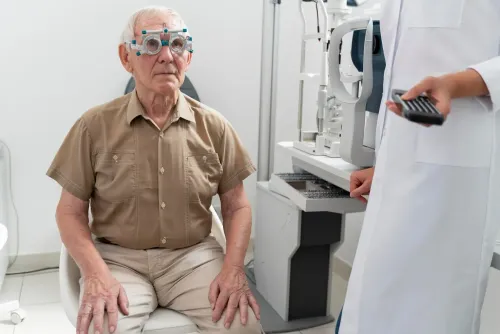
The cataract treatment benefits are less predictable when macular degeneration, diabetic retinopathy, glaucoma, corneal disease, amblyopia, or optic-nerve damage also limits sight. An evaluation with visual-acuity testing, slit-lamp examination, eye-pressure measurement, and a dilated retinal examination determines whether cataract surgery benefits in Panchkula are likely to outweigh continued waiting.
What must an eye evaluation confirm before surgery?
A decision for surgery needs more than a cataract seen on examination. The evaluation must show that the cataract explains your blurred vision, glare or reduced contrast, while checking whether another disease limits the likely cataract treatment benefits. Surgery is based on difficulty reading, working, driving or managing safely, not a fixed visual-acuity number.
1. Visual-acuity testing measures each eye with current glasses and, when useful, pinhole testing. This shows whether a new prescription could solve the problem or whether the lens opacity is the main cause.
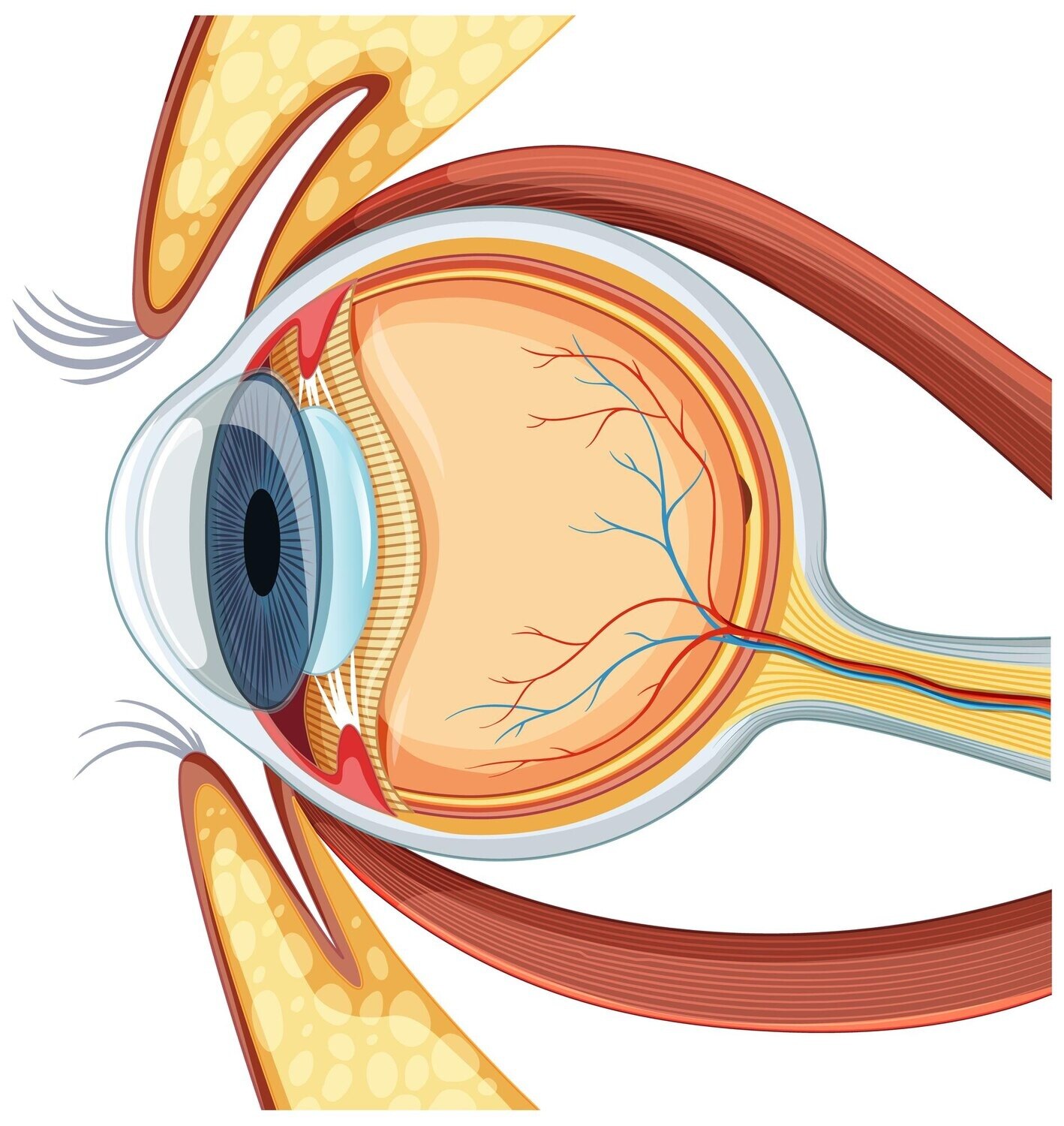
2. A slit-lamp examination grades the cataract and checks the cornea, iris and other front-of-eye structures. Eye-pressure measurement is important because glaucoma changes risk and follow-up needs.
3. After dilation, the clinician examines the retina and optic nerve for diabetic retinopathy, macular oedema, macular degeneration, retinal disease or optic-nerve damage. A dense cataract can hide these structures, so the expected visual improvement may remain uncertain until further testing.
4. Optical biometry measures axial length and corneal power to calculate the intraocular-lens strength. Dense cataracts, corneal disease, poor fixation, high myopia and previous laser vision surgery can make measurements less reliable and require repeat or alternative testing.
Tell the surgeon about diabetes, glaucoma, uveitis, high myopia, previous eye operations and anticoagulants. Mild symptoms can justify monitoring, but a hypermature cataract can make surgery harder. Before choosing cataract surgery in Panchkula, ask which findings support surgery now and which competing condition could limit the result.
Which intraocular lens gives the right balance of vision, glasses and cost?
A monofocal lens is usually the cost-conscious choice: it gives the sharpest vision at one selected distance, but you will commonly need reading glasses. Premium lenses can reduce spectacle dependence, not guarantee freedom from glasses.
| Option | Glasses, sharpness and astigmatism | Halos, contrast and night driving | Price |
|---|---|---|---|
| Monofocal | Sharp distance or near focus; glasses needed for the other range. Does not correct corneal astigmatism. | Usually strongest contrast and fewest optical symptoms. Often the easiest choice for night driving. | Usually the lowest lens cost. |
| Toric | Corrects measured corneal astigmatism and can improve unaided sharpness; glasses may still be needed. The lens can rotate and require repositioning. | Usually retains monofocal contrast and night-driving performance. | Costs more than a standard monofocal. |
| Multifocal | Provides distance and near focus with less spectacle dependence, but fine sharpness can vary between distances. | Halos and glare are common trade-offs; contrast can fall, making night driving uncomfortable. | Higher premium-lens cost. |
| Extended-depth-of-focus | Extends distance into intermediate vision, useful for computers; reading glasses remain more likely than with multifocal optics. | Fewer halos than multifocal lenses, but contrast and night vision can still be affected. | Higher than monofocal, with pricing set by lens model and hospital. |
Choose after discussing your work, reading distance, astigmatism measurements and night-driving needs. A premium lens is the wrong bargain if halos compromise safe driving.
Ask for the exact lens model and total package price before cataract surgery in Panchkula; cataract surgery benefits in Panchkula depend on matching the lens to your eyes, not choosing the costliest option.
What should you plan for on surgery day and during recovery?
Plan on a day-case visit, not a quick appointment. At the consultation, the team reviews your medical history and medicines, performs biometry to calculate intraocular-lens power, explains alternatives and risks, and records your consent.
A cataract service in Panchkula should tell you who performs each step and what happens if measurements are difficult because of a dense cataract, corneal disease or poor fixation.
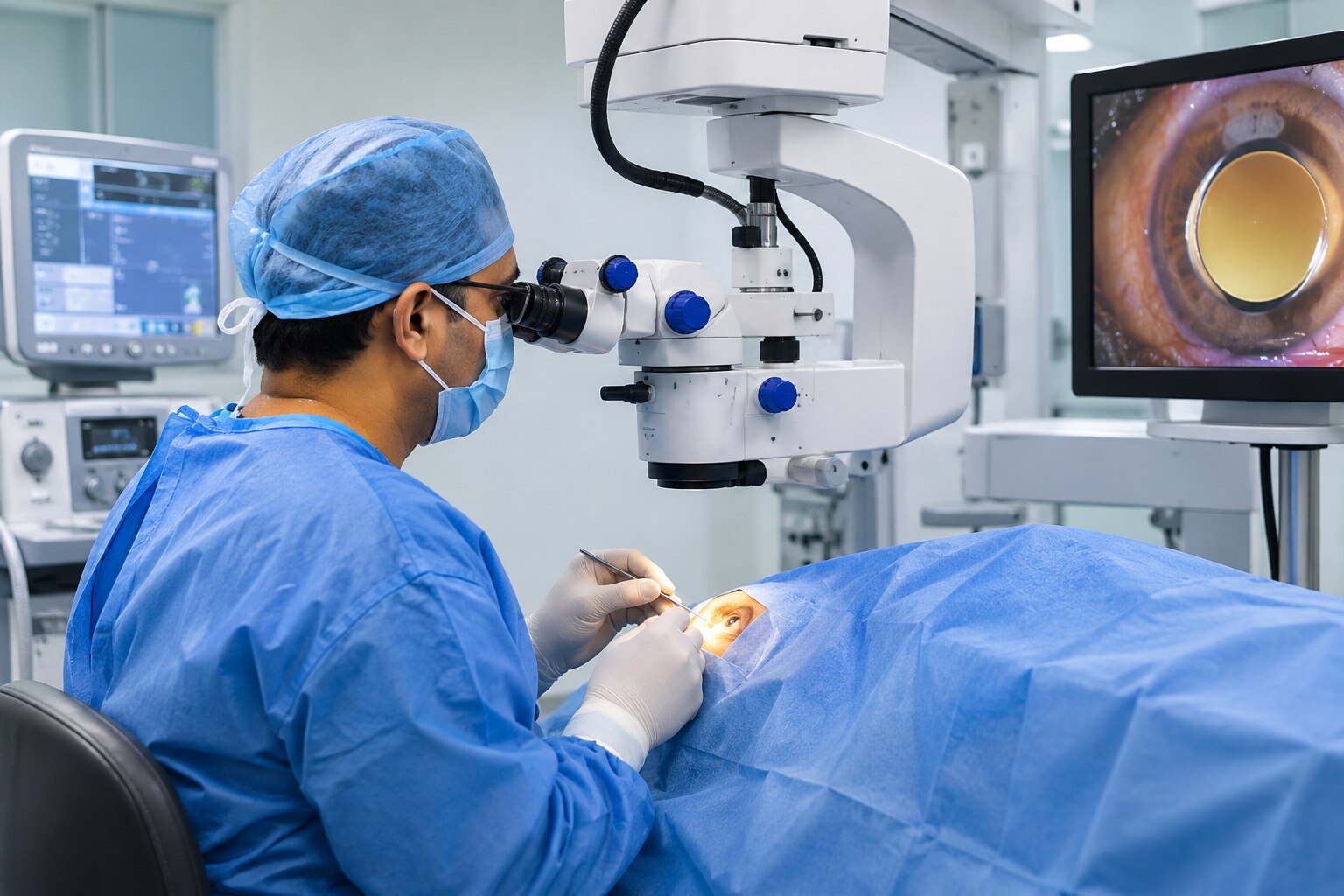
The operation usually uses topical or local anaesthesia, so you remain awake while the cloudy lens is removed through a small incision and the intraocular lens is inserted. Arrange an adult to take you home; do not drive yourself.
Expect blurred vision, light sensitivity or mild discomfort initially, then use the prescribed antibiotic, anti-inflammatory or pressure-lowering drops exactly as directed.
- Attend the scheduled next-day or early review and every later visit, even if vision improves.
- Return to desk work when you can see comfortably and your clinician approves; dusty, strenuous or safety-critical work needs a longer break.
- Resume driving only after adequate vision, no distracting symptoms and medical clearance.
- Keep water out of the eye and avoid swimming until your surgeon confirms healing.
- Avoid heavy lifting and vigorous exercise until your clinician gives a time limit.
- Do not rub or press the eye; use the shield at night if prescribed.
Before booking cataract surgery in Panchkula, confirm that postoperative reviews and urgent complication support are included, rather than comparing the operation price alone. Pain worsening, marked redness, discharge, flashes, new floaters or sudden vision loss requires urgent assessment.
How should you compare a Panchkula cataract hospital before choosing?
Compare the whole pathway, not the operation price. A dense or hypermature cataract can make surgery technically harder and block examination of the retina and optic nerve, so ask what happens if surgery is delayed and how complications are managed.
Use the same checklist at every cataract hospital in Panchkula, including Netra Eye Hospital:
- Who performs the examination, biometry and surgery?
- Is optical biometry available, and what happens if dense cataract, corneal disease, poor fixation or previous laser surgery makes the measurement unreliable?
- Are retinal, glaucoma, anaesthesia and emergency services available on site or formally arranged?
- Does the quoted package include postoperative reviews, prescribed medicines and treatment of an unexpected problem?
- Which exact intraocular-lens model is supplied, and will you receive its model, power, batch details and warranty documentation?
- What evidence supports claims such as “premium,” “advanced,” reduced spectacle use or better night vision?
| Plan element | Ask for | Why it matters |
|---|---|---|
| Surgeon and measurements | Named surgeon; biometry method and repeat-measurement policy | Incorrect axial length or corneal-power data can leave you with an unexpected glasses prescription. |
| Complication support | Written referral or 24-hour contact for retinal, glaucoma and anaesthesia emergencies | Sudden pain, worsening vision, marked redness, flashes or new floaters need urgent assessment. |
| Follow-up | Dates and fees for postoperative examinations | A low package price is misleading when reviews or complication care are excluded. |
| Lens choice | Exact lens name, power and documentation | “Premium” is not a specification; compare optical trade-offs and proof. |
A mildly symptomatic cataract can be monitored while glasses are updated. It will not reverse, and brighter lighting cannot clear the cloudy lens. A cataract service in Panchkula earns comparison on documented care before, during and after surgery—not on technology labels alone.
Related services
Clinical Service at Netra Eye Hospital provides comprehensive diagnosis, treatment, and advanced surgical care for patients with cataracts. View service → |
Customised Premium Cataract Service at Netra Eye Hospital offers advanced cataract treatment tailored to each patient's visual needs and lifestyle. View service → |
Frequently asked questions
When does cataract surgery offer more benefit than waiting?
Surgery offers more benefit when cataracts interfere with reading, recognising faces, cooking, bathing, walking outdoors, working, or driving. Glare, faded colours, and frequent prescription changes also indicate that delaying treatment is affecting daily life.
What must an eye evaluation confirm before cataract surgery?
The evaluation should confirm the cataract diagnosis, measure eye length and corneal curvature for lens-power calculation, check the retina and optic nerve, assess eye pressure, review medicines and health conditions, and identify risks such as diabetic eye disease or macular degeneration.
Which intraocular lens gives the right balance of vision, glasses and cost?
A monofocal lens usually provides clear vision at one chosen distance and costs less, with glasses often needed for other distances. Toric lenses address significant corneal astigmatism. Multifocal or extended-depth-of-focus lenses can reduce glasses dependence but cost more and can cause glare or halos. Match the lens to your prescription, lifestyle, night-driving needs, eye health, and budget.
What should you plan for on surgery day and during recovery?
Arrange transport, follow fasting and medicine instructions, bring your prescriptions, and avoid driving home. Use prescribed eye drops, wear the protective shield as directed, avoid rubbing the eye and heavy lifting during the advised period, and attend follow-up visits. Seek urgent care for severe pain, sudden vision loss, marked redness, or increasing flashes and floaters.
How should you compare a Panchkula cataract hospital before choosing?
Compare the surgeon’s qualifications and experience, preoperative testing, biometry equipment, available lens options, infection-control practices, itemised pricing, follow-up schedule, management of complications, and access to urgent postoperative care. Ask what the quoted cataract service includes before booking.